
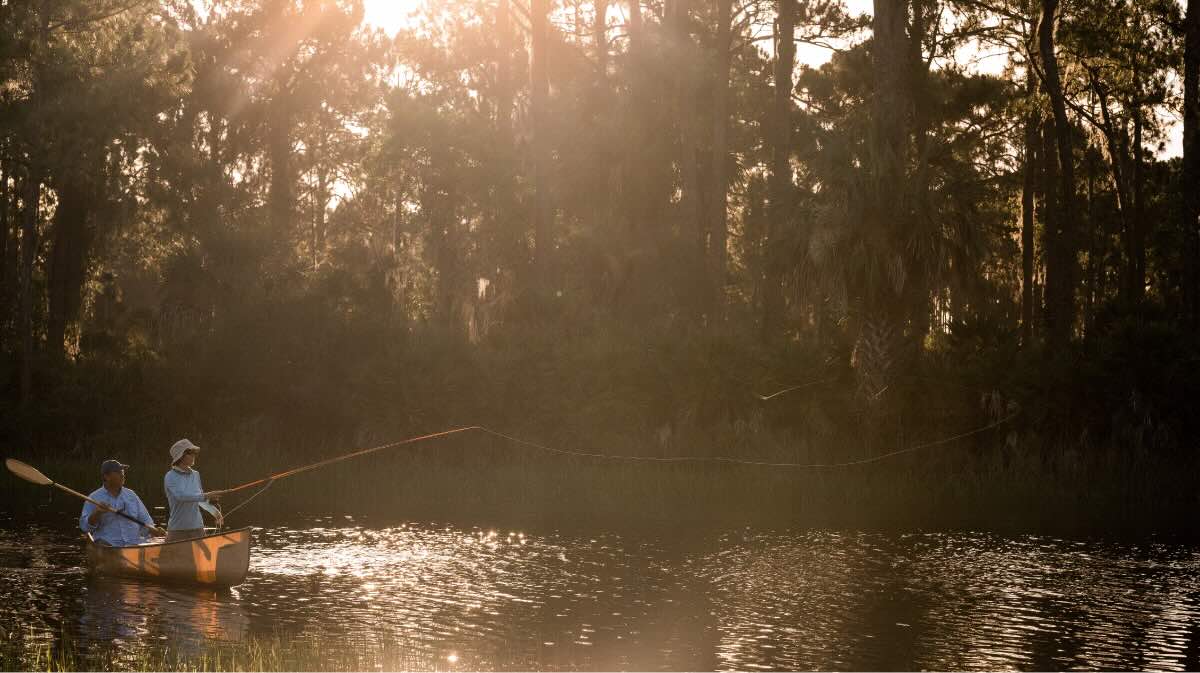
One of the ways fly fishers can strengthen and invigorate their fly fishing skills is to fish with poppers. Poppers are effective in fresh and saltwater environments and when fished skillfully will entice a wide variety of species to take at or just under the surface resulting in dramatic, heart-pounding strikes.
In fact, over the last 50 years, I’ve used a popper more than any other type of fly. They are fun to fish, elicit exciting strikes and are effective. Many days I’ll wrap it up at 2pm with the same popper that I tied on at daybreak. Poppers are among the most versatile flies. They can imitate frogs, mice, dragonflies, grasshoppers and many types of baitfish. You can fish them slow, fast, or somewhere in between, depending on your quarry and circumstances. A popper can be used to imitate specific prey for selective fish, or to elicit reactionary, or “anger strikes” from otherwise hard-to-trick territorial lunkers.
The basic concept of the popper has changed little since the first made commercially available by Chattanooga businessman E.H. Peckinpaugh in 1920. It is said that he got the idea after witnessing a fish attack a bottle cork that he dropped in the river. Since then, inventive fly tiers have conceived different body shapes and experimented with other floating materials to achieve high levels of success.
Personally, my early days of popper-making were onerous. At the beginning, it was tedious shaping the cork body, sanding, sealing, painting (two coats of lacquer) and finally completing the tying process. It took me nearly a week to create a batch. Today, I’ll admit, I can fill my fly box with ready-to-fish poppers in an evening. Foam, of different varieties, has largely replaced balsa and cork. My favorite material, EVA foam, comes in a variety of colors, eliminating the need to paint. The Krebs Popper Jig is an ingenious device for cutting foam popper heads from EVA cylinders in sizes ranging from ¼” (panfish) through 15/16” (saltwater/ blue water). Deer hair, whether stacked or spun, is a classic and is deserving of a category all its own.
Aside from size, the shape of your popper will indicate its purpose. Sleek, bulbous, angular, or cupped – all choices that will influence the “pop,” or water displacement, when stripped. Let’s look at a few different options.

Body Types
Bubble
A favorite of panfish anglers, the bubble shape produces a gentle wake when stripped. Try fishing this one with only minimal movement. In larger sizes, this is a good choice for a cicada match.
A favorite of panfish anglers, the bubble shape produces a gentle wake when stripped. Try fishing this one with only minimal movement. In larger sizes, this is a good choice for a cicada match.
Bottle Stopper
The original classic shape. Usually painted cork or EVA foam , this one is the most widely available in stores.
The original classic shape. Usually painted cork or EVA foam , this one is the most widely available in stores.
Cupped
The standard bass and panfish popper, made to move a lot of water. The front portion is concave to give the most commotion for the strip. This shape is often painted in frog or bumble bee motifs and is adorned with rubber legs, feather tail, and palmered hackle.
The standard bass and panfish popper, made to move a lot of water. The front portion is concave to give the most commotion for the strip. This shape is often painted in frog or bumble bee motifs and is adorned with rubber legs, feather tail, and palmered hackle.
Pencil Popper
As the name suggests, the long, slender profile makes a great wounded minnow or lizard imitation.
As the name suggests, the long, slender profile makes a great wounded minnow or lizard imitation.
Slider
Designed to be stealthy, the slider does just that – it slides and dives. Great for river fishing, the slider best mimics a baitfish. Look closely and you’ll notice that the body is the same as the pencil popper, only flipped so the back taper is at the front.
Designed to be stealthy, the slider does just that – it slides and dives. Great for river fishing, the slider best mimics a baitfish. Look closely and you’ll notice that the body is the same as the pencil popper, only flipped so the back taper is at the front.
Angular
The clean lines and sharp edges produce considerable noise. Often this is the shape of EVA foam poppers.
The clean lines and sharp edges produce considerable noise. Often this is the shape of EVA foam poppers.
Deer Hair
Deer hair bugs have a magic all their own. Stripes and spots are added by tying in different hues of deer belly hair. Well-tied hair bugs are a treat to the eye, but what truly sets them apart is the “pop” that they make. The individual hairs trap air between them so that when stripped, the bug releases hundreds of tiny air bubbles, making what I describe as a “blub” sound. Deer hair bugs can be trimmed to any number of shapes, and the artistry of practiced tyers is impressive.
Deer hair bugs have a magic all their own. Stripes and spots are added by tying in different hues of deer belly hair. Well-tied hair bugs are a treat to the eye, but what truly sets them apart is the “pop” that they make. The individual hairs trap air between them so that when stripped, the bug releases hundreds of tiny air bubbles, making what I describe as a “blub” sound. Deer hair bugs can be trimmed to any number of shapes, and the artistry of practiced tyers is impressive.
Salt Water
Saltwater poppers are designed to make a big disturbance, in fact, some anglers use the “pop” to imitate the noise of other feeding fish. Insects, frogs and mice do not play much of a role in saltwater, so the “buggy-looking” legs and hackles are usually abandoned in favor of a streamlined baitfish or shrimp look.
Saltwater poppers are designed to make a big disturbance, in fact, some anglers use the “pop” to imitate the noise of other feeding fish. Insects, frogs and mice do not play much of a role in saltwater, so the “buggy-looking” legs and hackles are usually abandoned in favor of a streamlined baitfish or shrimp look.

Equipment Choices
Leaders
The basic technique of popper fishing is to make an intentional, controlled disturbance in the water. So a long, fine leader doesn’t carry the same importance as other types of presentations. I generally use a leader that is the same length as my rod. If you tie your own tapered leaders, follow the 50/25/25 formula – that is 50% butt section, 25% taper-section and 25% tippet. Determine the butt section using “the rule of five,” where you multiply the line weight that you’re using by five (example- 4wt. line x 5 = 20lb. test) and stepping down in diameter (not more than 25%) to the tippet. Choose nylon for your leaders. Fluorocarbon sinks and will hinder the action of your popper by pulling it downward, unless that is your desired result.

Match your tippet size proportionally to the size of your popper. If your tippet is too light, your fly won’t turn over properly; if your tippet is too heavy, the popper won’t have the most effective action. The following chart is a good general guide.

Lines
Choose a floating fly line that comfortably delivers your fly smoothly to the target. I prefer a standard-length head and shy away from aggressive “bass bug” tapers. Although useful when using larger flies, short head, over-weighted lines tend to land with more of a splash than necessary – especially when using smaller poppers.
Rods
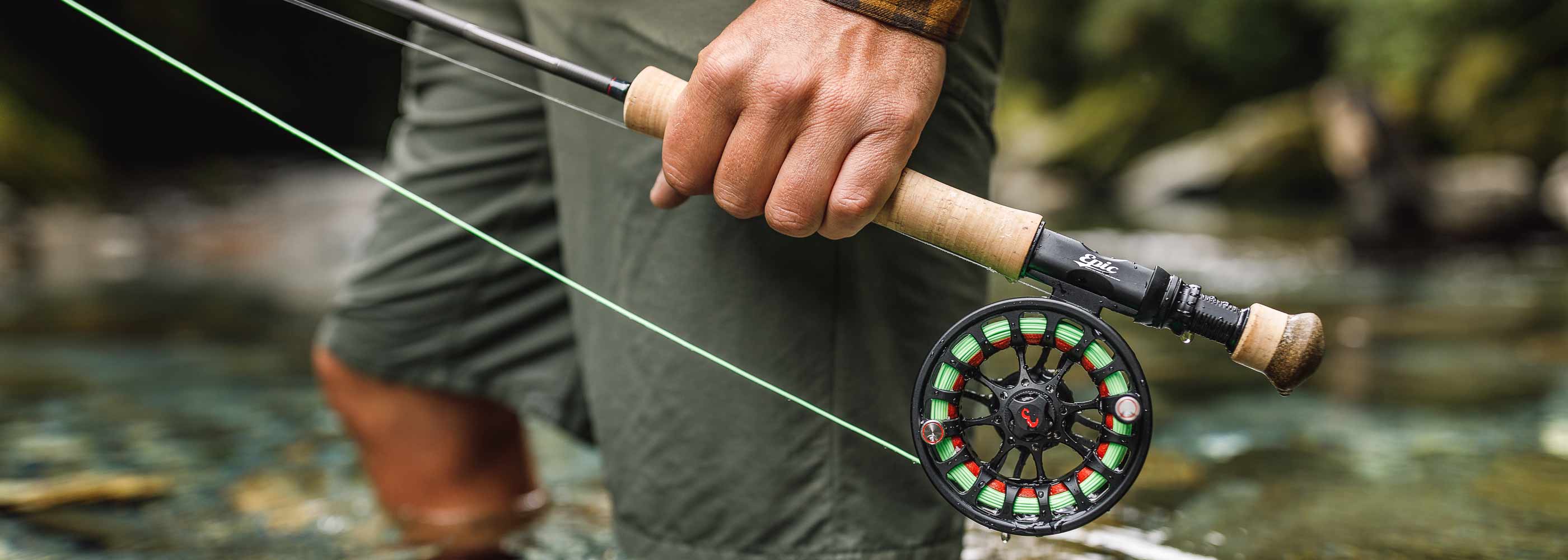
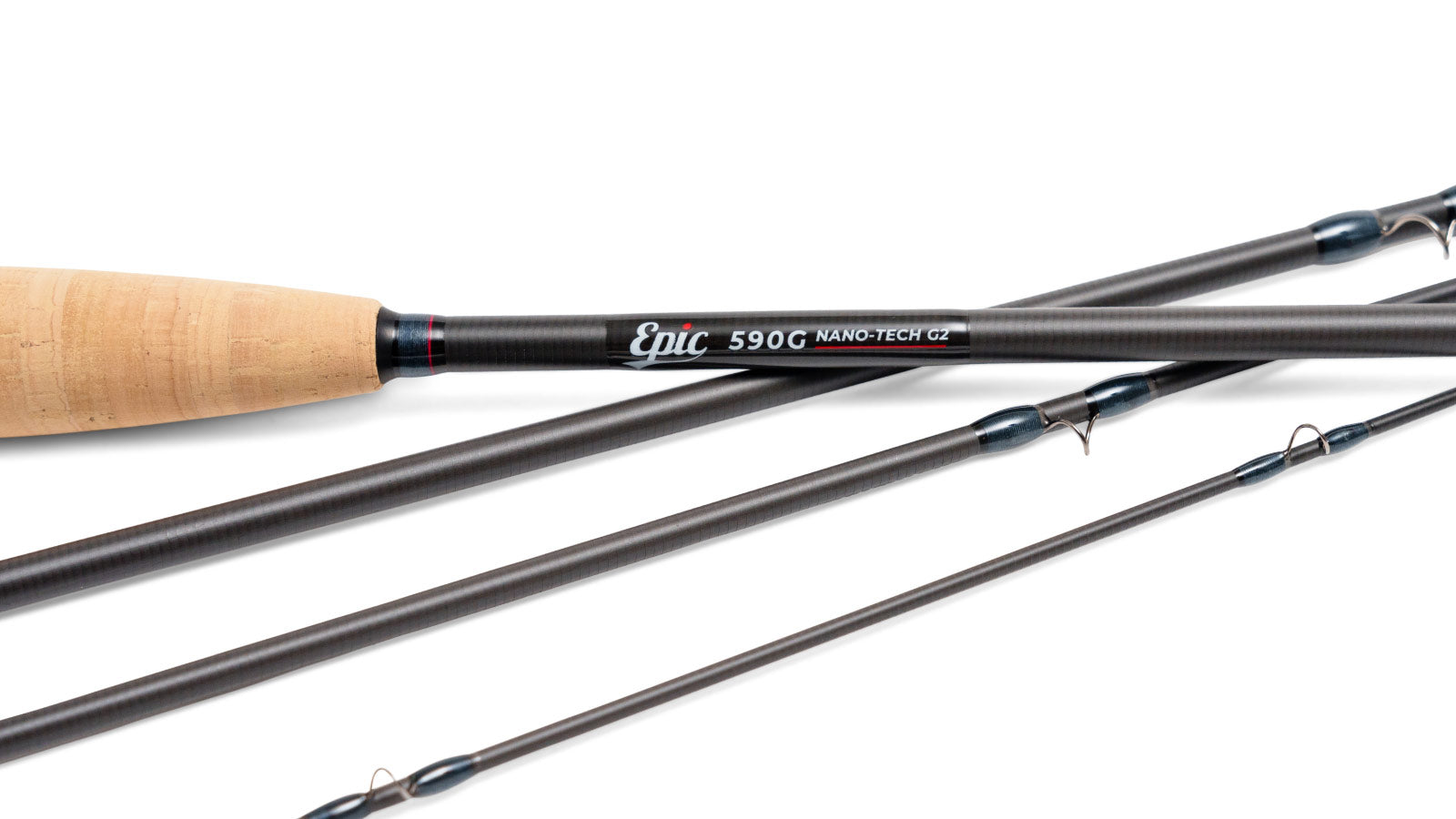
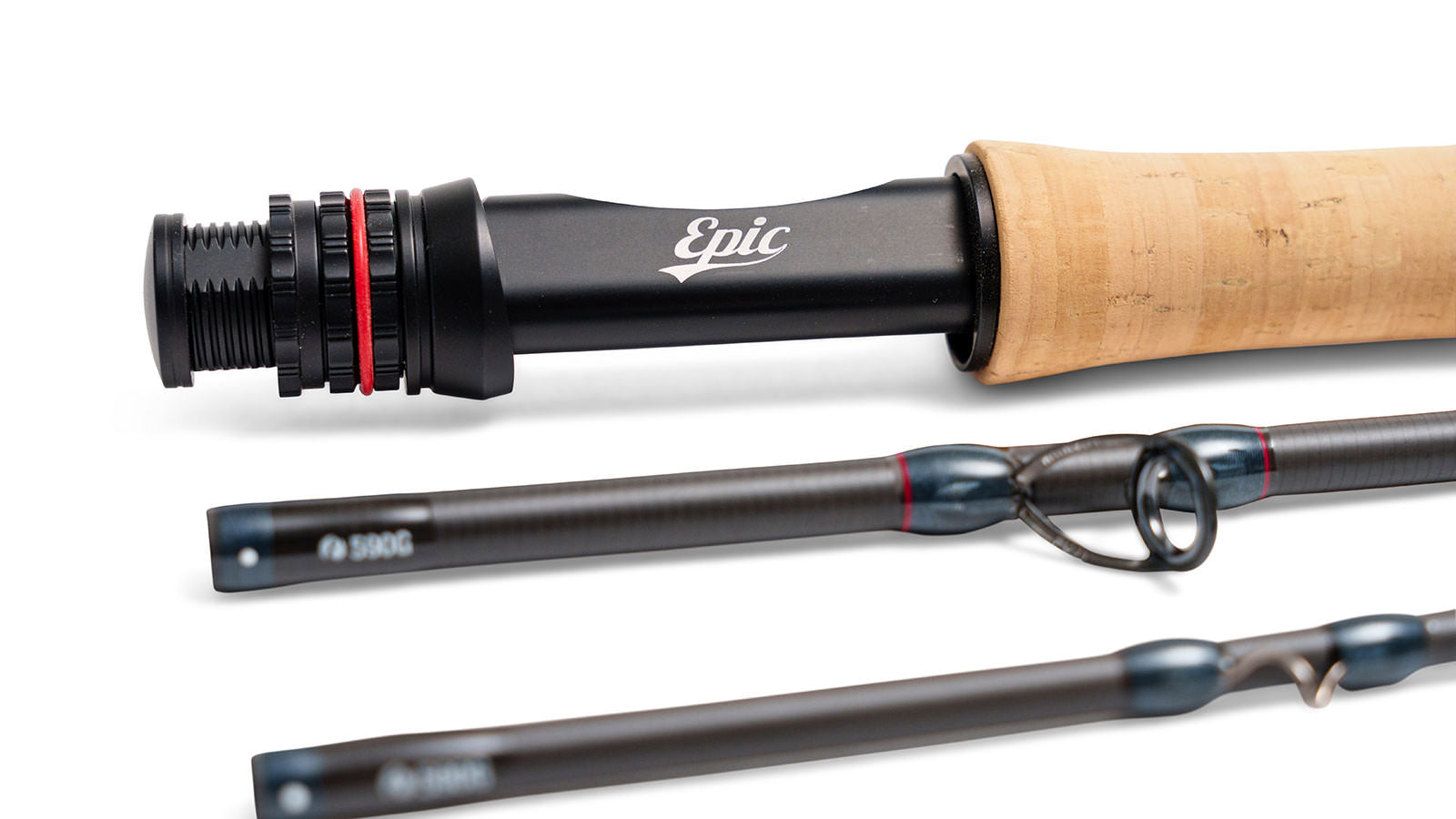
Use your favorite. Because I often fish tight quarters and under overhanging trees, using shorter rods makes it easier. The Reference 5wt 580 FastGlass Fly Rod is my go-to for most bass and panfish trips. Balancing your outfit, including the fly, is key. Choose a fly that suits your set up.
Presenting the Fly
“The better the cast, the slower you fish.” That is my mantra for fishing shoreline and cover, and it works. If you place the fly in that perfect spot, you can bet that the fish sees it and perhaps sees it as a threat. Let it sit, let it “bug” the daylights out of that fish. Early on, I was told to “pop, let the rings clear, and pop again.” As the fly gets more out in the open, I’ll strip harder and maybe faster, to draw interest from a larger area. Instead of watching your popper, keep your eyes moving in a five-foot radius around the fly, looking for wakes. So many times, I’ve seen the popper get picked up just as the fish strikes. In the event of fish crashing bait, such as when fishing for saltwater jacks or stripers, cast into the school and strip as fast as you can. Traditional wisdom says that topwater fishing is done early and late in the day, but I have had some of my most notable catches after the noon hour. Then, one of the keys to success is finding shade – especially in shallow lakes and rivers.
To get the most from your strips, keep your rod tip in, or very near the water. If the rod tip is raised, slack forms, costing you a good portion of your strip. Keeping the rod tip low is much more efficient, moves the popper immediately and makes a stronger pop. In addition, this slack-free presentation results in more hook-ups. Avoid trying to pop the fly by moving your rod tip, you’ll only create more slack. For a more dramatic pop, try fishing a longer line.

Double down
For those who wish to increase the odds of success in freshwater, I suggest the “popper and dropper” rig. A simple in-line configuration works best. Tie a 12” to 18” section of lighter tippet to the bend of the hook, connecting the popper to your favorite wet fly such as a soft hackle or Western Coachman. Strip to the tempo of the dropper fly and give it time to sink.

Casting Tip
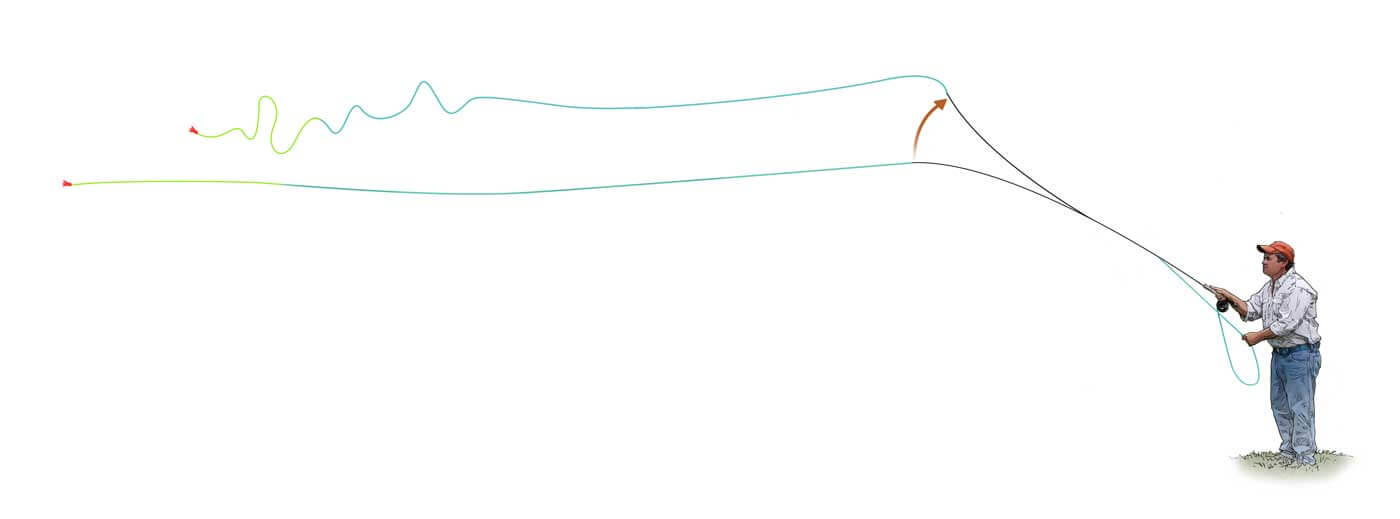
Poppers are bulky, air resistant and sometimes heavy. Adopting an elliptical-style cast will save you heartache (and a few wind knots). Start near the surface and lift the rod tip gently to the side until the fly line is completely out of the water. Apply power to complete your back cast. Ideally, the only disturbance to the surface will be the “exit splash” of the popper.
When I think back on my favorite fishing memories, many were made with a popper tied to my tippet. Whether you tie them, or buy them, poppers are versatile, effective, and draw the most dramatic strikes imaginable- memories that last a lifetime.

|
Words and images by Joe MahlerJoe Mahler is one of the USA's leading fly casting instructors and author and illustrator of “Essential Knots & Rigs for Trout” and “Essential Knots & Rigs for Salt Water”. You can Book a fly casting lesson with Joe via his website here. |