
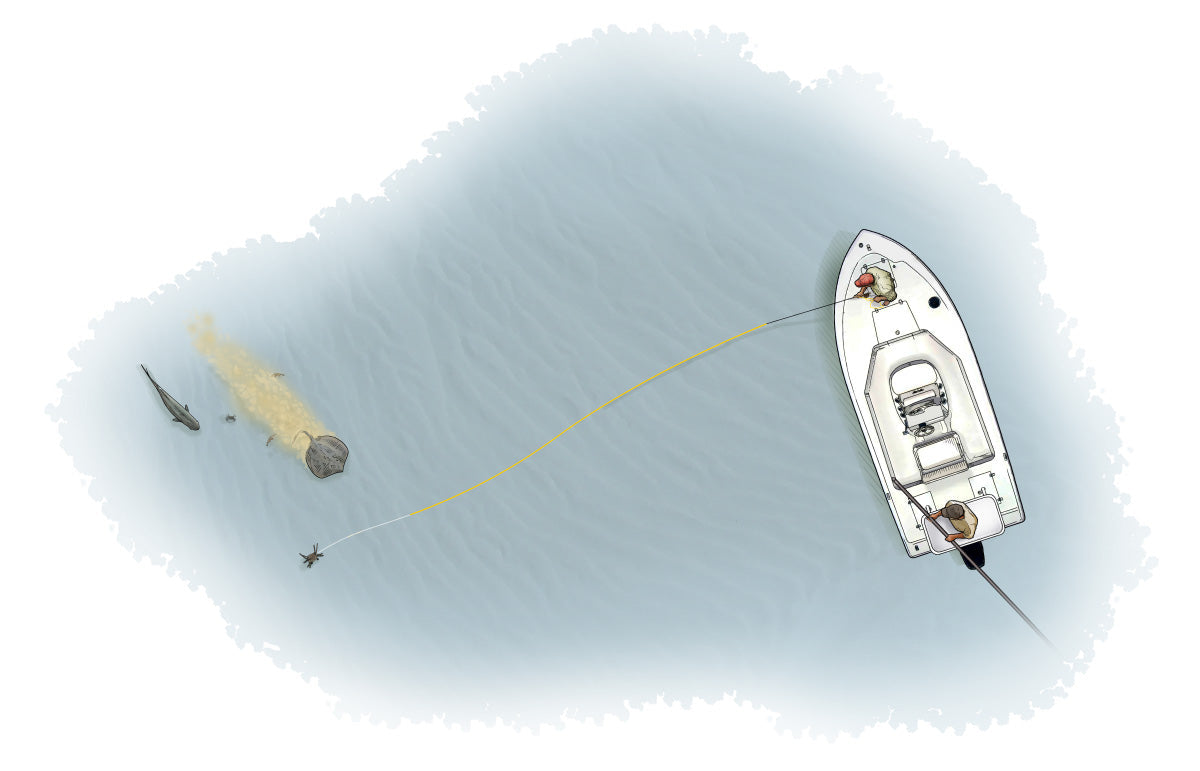
A little preparation and clear communication will ensure that both you and your guide have a pleasant and rewarding experience. Here are ten tips that will get you well on your way.
Some book fishing charters to spend a relaxing day on the water, others are looking to add a prize species to their life list, or maybe learn a different type of fishing. They all want to have the best day possible on the water. 
Communicate
The maxim “The only stupid question is the one that is not asked” is especially fitting when booking a charter. How long will we be on the water? Should I bring lunch? What about using the bathroom? Should I bring my own fly rod? These are all good questions and any good guide will be happy to discuss. If you have health concerns, definitely let your guide know in advance of the trip, as it could influence the particulars of the day.

Prepare
Get your gear rigged the night before the trip. Knots are more easily tied sitting at your desk than on a moving boat or in windy conditions. If you choose to use your own equipment, check to make sure rods, reels, and lines are all up to date and in working order. Read up on the fishery, take a casting lesson—whatever you can do to make sure that you are at your best for a great day.
Fish for what’s biting
Unless you have a specific goal, opt for your guide’s recommendation on target species. The guide is out there every day and will know where to find the best action.
Be on time, but not too early
Your guide has a routine, and while being a little early doesn’t hurt, showing up an hour early will disrupt the process of readying the boat, rigging equipment and so on.
Be honest about your skills
If you are an accomplished angler, tell your guide. If not, that will be valuable information as well. A professional guide trip is a great time to learn new techniques and perfect your skills.
To keep or not to keep
If your goal is to bring a few fish home for the grill, you should discuss this prior to the trip. Many top guides are “catch-and-release only” and keeping fish will likely determine where you will go and what techniques you will use.

Keep the deck clean
If you favor spray sunscreen and bug dope, apply it BEFORE you board. The chemical make-up of either will make the deck of the boat very slick and can damage the boat’s finish. Take a hand towel if fishing on a boat and wipe your shoes before boarding.
Find the right guide
Do your research. Ask friends, search the internet and social media. Call the guide to make sure that you both have clear expectations. Not all personalities mesh. A phone conversation will usually tell you a lot. If the guide is not friendly on the phone, move on.
Decide with your fishing partner how to split time and cost
If you will be doing the type of fishing that allows only one angler at a time, discuss how to take turns. Some choose to set a timer (say a half hour and switch), or the “you catch one, then I’ll catch one” method. Either way, do your best to make it fair.
First and foremost, a fishing guide’s job is to get you back to the dock safely. When on a boat, the captain’s word is final. That said, you should demand respect and your guide should always be courteous and professional. Guiding is a service, and as with other service professions, tips for a job well done are appreciated.

|
Words by Joe MahlerJoe Mahler is one of the USA's leading fly casting instructors and author and illustrator of “Essential Knots & Rigs for Trout” and “Essential Knots & Rigs for Salt Water”. You can Book a fly casting lesson with Joe via his website here. |
Images by Jeremy Clark